


- Digital HR strategy should connect leadership development with everyday leadership action.
- HR data becomes more valuable when it helps managers decide what to do differently.
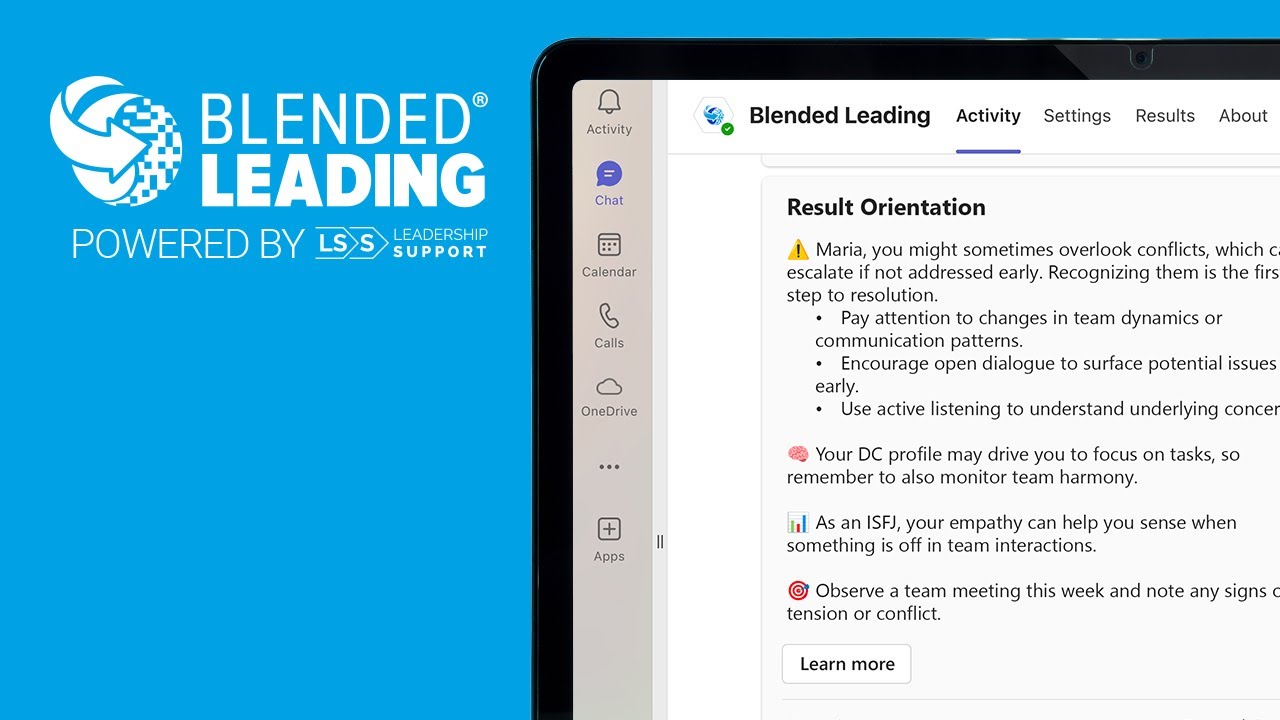
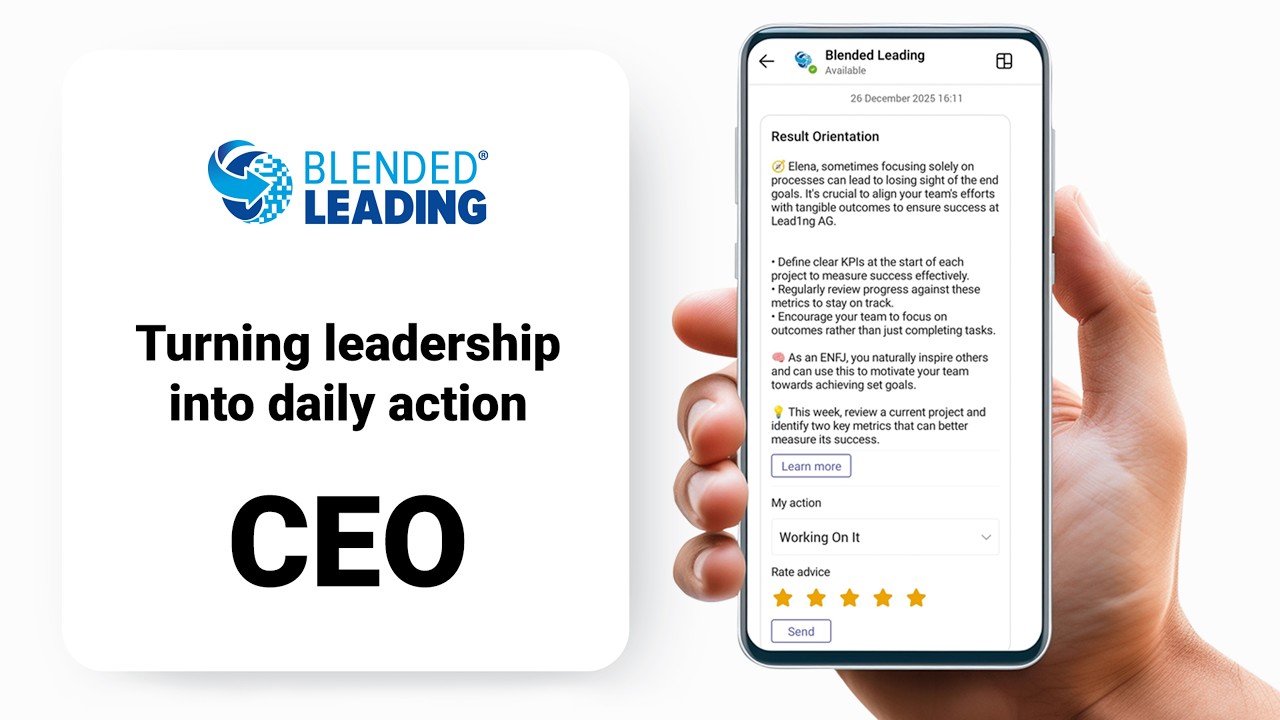
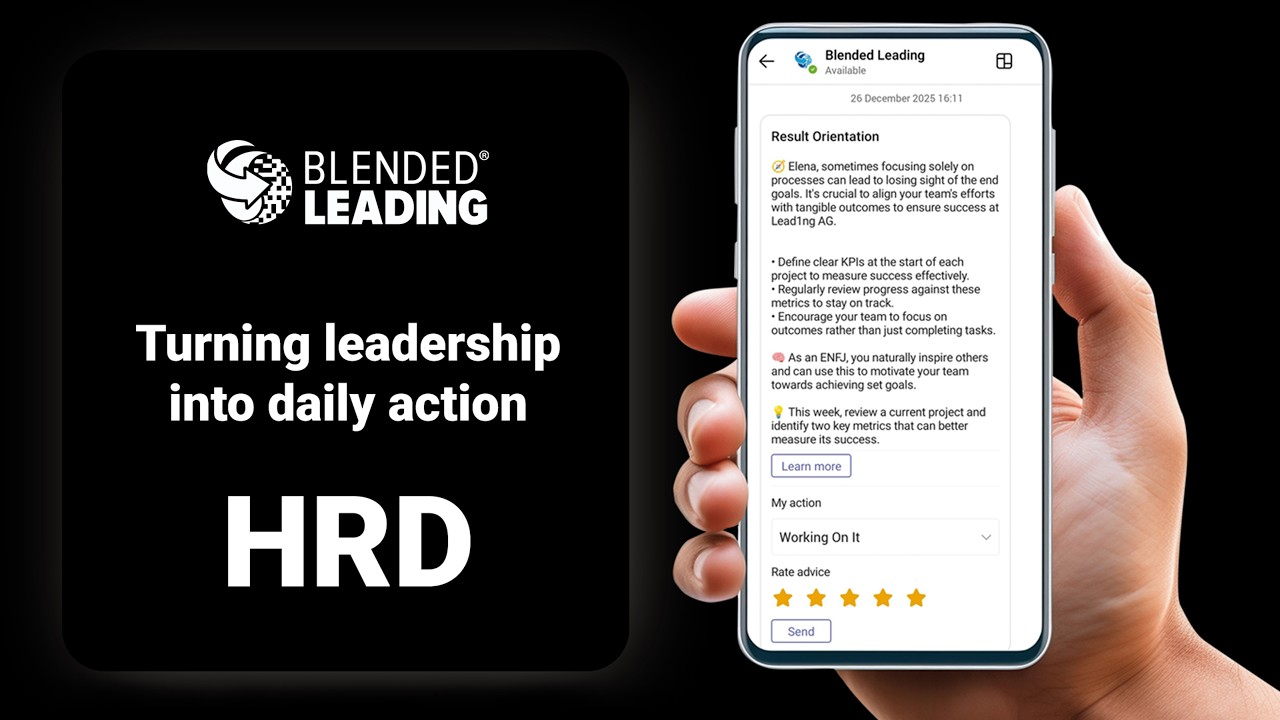
- Blended Leading brings personalized, bite-sized nudging into Microsoft Teams.
Digital HR strategy can easily become a technology strategy in disguise. Organizations implement platforms, collect employee feedback, run 360-degree assessments and expand digital learning libraries. Yet one important question remains: What changes in the way managers actually lead?
Real development needs leadership action.
Knowing that delegation needs improvement is useful. Changing the next delegation conversation is better. Understanding feedback principles matters. Applying them when an employee misses a target is where development becomes visible.
A strong digital HR strategy should therefore connect insight, learning and daily leadership behavior.
Digital HR Strategy Should Start With Leadership Action
HR teams already have significant information about leadership. There may be competency models, corporate values, psychometric profiles, 360-degree feedback, engagement surveys and learning resources.
The problem is often not the absence of information. It is turning that information into something a busy manager can use.
This challenge is particularly relevant for middle managers. They translate organizational strategy into everyday execution while handling performance, feedback, team development and operational demands. The supplied Blended Leading manager persona also highlights a preference for practical, lightweight support that fits into daily workflows.
A digital HR strategy should help managers answer practical questions:
- What should I focus on now?
- Which behavior should I practice?
- How can I apply this during real work?
- What does better leadership look like in our organization?
- Where can I find relevant learning without starting another lengthy process?
That shift moves digital HR from information delivery toward leadership action.
Connect Leadership Data With Daily Decisions
Collecting more leadership data is not automatically progress.
Imagine a manager receives a 360-degree report showing an opportunity around communication. A traditional process might include a review meeting, development plan and course recommendation.
Those steps can be useful. But the manager still enters Monday morning with meetings, targets, employee questions and deadlines.
Digital HR should shorten the distance between insight and application.
For example, communication feedback could translate into a small action before a team meeting: explain the reason behind a priority change, invite questions and check whether responsibilities are understood.
The development moment is now connected to actual work.
This approach also helps HR make better use of information that already exists rather than treating every development need as a reason to launch another isolated initiative.
Build a Practical Digital HR Strategy in Five Steps
Leadership development becomes more actionable when HR designs the system around behavior rather than content volume.
- Define the leadership behaviors that matter. Start with the organization’s leadership competency model, values and strategic priorities.
- Identify relevant leadership data. Determine which existing inputs can help reveal strengths and development areas.
- Translate insight into leadership action. A development need should lead to something a manager can realistically practice.
- Deliver support close to the moment of work. Managers should not have to navigate several disconnected systems every time they need guidance.
- Review development over time. Leadership growth should be treated as a journey rather than a one-off training event.
The goal is not to digitize every HR activity. It is to create a clearer path from organizational expectations to individual action.
Pro tip: Before adding another leadership tool, map the current manager journey. Count how many platforms, reports and steps stand between receiving feedback and taking action. Simplification may create more value than adding more content.
Where Blended Leading Fits Into Digital HR Strategy
Blended Leading is designed around this gap between leadership insight and daily application.
It operates through Microsoft Teams. Organizations can provide strategic leadership materials such as their competency model, leadership guidelines and corporate values.
Depending on the information provided, Blended Leading can also work with inputs such as 360-degree feedback and psychometric profiles. Its process uses specialized AI components to extract information, analyze textual feedback and generate short personalized leadership advice, described as “nudges.”
This creates an important connection: organizational leadership expectations can inform individual leadership action.
Digital HR Should Reduce the Gap Between Knowing and Doing
Leadership development does not fail simply because managers lack content.
The harder challenge is application.

A manager may understand coaching but postpone the conversation. They may know delegation theory but continue taking tasks back. They may receive feedback about communication without knowing what to change tomorrow.
Digital HR strategy should make those transitions easier.
For HR leaders, that means asking a different question. Instead of “How much learning are we providing?” ask:
“How easily can managers turn development insight into leadership action?”
That question changes the design of leadership development.
It brings the focus back to behavior, context and continuous practice.
FAQ
What is leadership action?
Leadership action is the practical behavior through which a manager applies leadership principles, feedback or development insights during real work.
How does digital HR support leadership development?
Digital HR can connect leadership data, organizational expectations and learning resources. The strongest approach makes those inputs easier to apply during everyday leadership situations.
Why is leadership action important after a 360-degree assessment?
A 360-degree assessment provides insight. Leadership action turns that insight into practice by helping managers focus on behaviors they can change or strengthen.
Can digital HR replace leadership training?
It does not need to. Digital HR can complement training by helping managers connect learning with daily situations and continued practice.
How does Blended Leading support leadership action?
Blended Leading uses organization-specific leadership inputs and individual data to generate short, personalized leadership nudges delivered through Microsoft Teams.
If your organization wants to connect leadership data, development and everyday leadership action more effectively, contact us to explore how Blended Leading could fit into your digital HR strategy.