

- Strategy execution often depends on what happens between executive decisions and frontline work.
- Team leads turn strategic priorities into concrete actions, decisions and team behaviors.
- Supporting managers in the flow of work can help organizations reinforce the leadership behaviors their strategy requires.
A strategy can be clear in the boardroom and still become blurry by the time it reaches the frontline.
Between those two points sits the middle of the organization. Team leads, department heads and regional managers receive priorities from above. Then they have to make those priorities work in real operating conditions. They translate goals into tasks. They explain change. They resolve conflicting demands. They coordinate with other teams. And they keep delivery moving when employees need clarity.
That makes middle managers an essential part of strategy execution.
Yet organizations can easily treat them as a communication channel rather than an execution layer. The difference matters.
Strategy Execution Happens in Everyday Decisions
Strategy rarely fails because nobody has seen the presentation. The harder question is what happens afterwards.
Imagine that an organization introduces a strategic priority around customer centricity. Senior leadership can define the direction. HR can align development initiatives. Communications can explain the change.
But a team lead still has to answer practical questions.
What should the team do differently on Monday? Which existing priority becomes less important? What does customer centricity mean during a difficult client conversation? How should performance be discussed?
This is where strategy becomes behavior.
Middle managers are expected to translate departmental goals into daily tasks, KPIs and priorities. They also implement new processes, tools and organizational changes while managing disruption and pushback.
In other words, strategy execution is not simply cascaded. It is interpreted.
Why the Middle Becomes Blocked
Team leads operate under pressure from both directions.
Senior leaders expect results, alignment and momentum. Employees need context, support and realistic priorities. Meanwhile, managers may have limited authority to change the decisions they are responsible for implementing.

Several obstacles can appear:
- competing priorities from different stakeholders;
- unclear links between strategy and daily responsibilities;
- limited leadership preparation;
- resistance or uncertainty within the team;
- cross-functional dependencies that managers cannot resolve alone;
- insufficient time for traditional leadership development.
That makes “the middle” a potential bottleneck. But it also makes it one of the strongest opportunities for improving execution.
Turn Strategy Into Clear Team-Level Choices
Better strategy execution starts by making the strategic direction usable. Team leads need to connect the big picture with decisions their people make every day.
A practical sequence looks like this:
- Clarify the priority. Define what the strategic objective means for this specific team.
- Translate it into behavior. Identify what people should start, stop or continue doing.
- Connect it to existing work. Show how projects, responsibilities and KPIs support the priority.
- Surface conflicts early. Flag capacity issues and competing objectives instead of allowing silent misalignment.
- Reinforce the message. Revisit the strategy during regular meetings, feedback and decisions.

Consider a manager leading an operations team during a digital transformation.
- “Support digital transformation” offers little guidance.
- “Use the new workflow for all new requests and discuss adoption barriers during the weekly team meeting” is actionable.
The second version gives people something they can actually execute.
Give Team Leads Context, Not Another Initiative
Organizations often respond to leadership gaps with more training. Training can be valuable. The challenge comes afterwards.
A manager returns to a full inbox, operational targets, employee issues and meetings. Under pressure, familiar habits are easy to resume. Leadership support therefore needs to connect development with the moments when managers are actually leading.
Pro Tip: When introducing a strategic priority, ask managers to identify one recurring leadership moment where the strategy should become visible. It could be a one-to-one, project review, delegation decision or team meeting. This makes an abstract priority easier to practice consistently.
Reinforce Strategy Execution in the Flow of Work
This is where Blended Leading approaches leadership development differently.
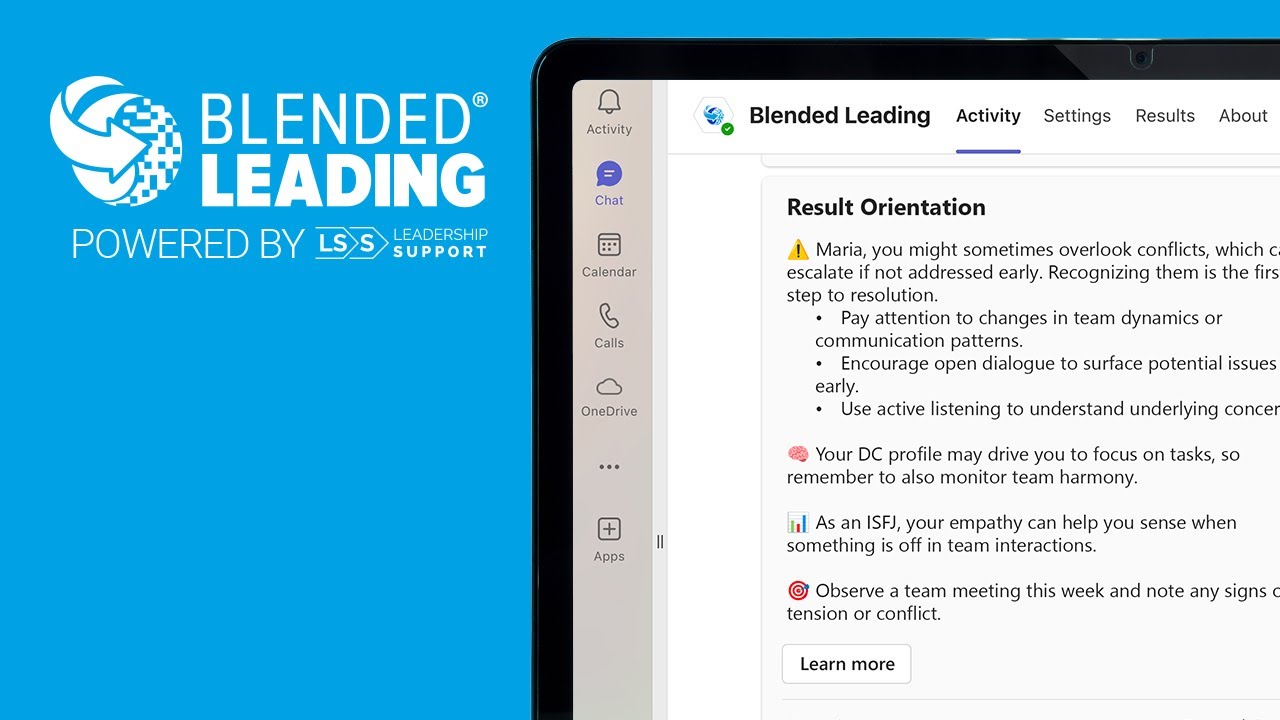
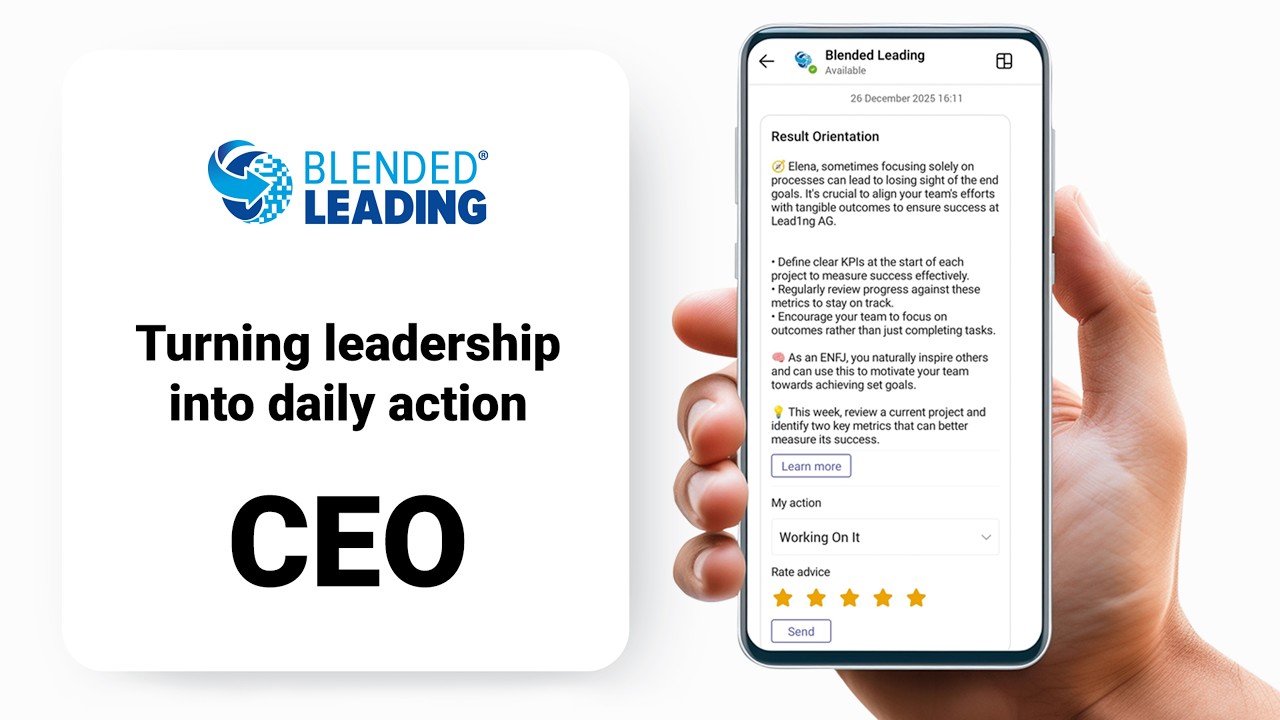
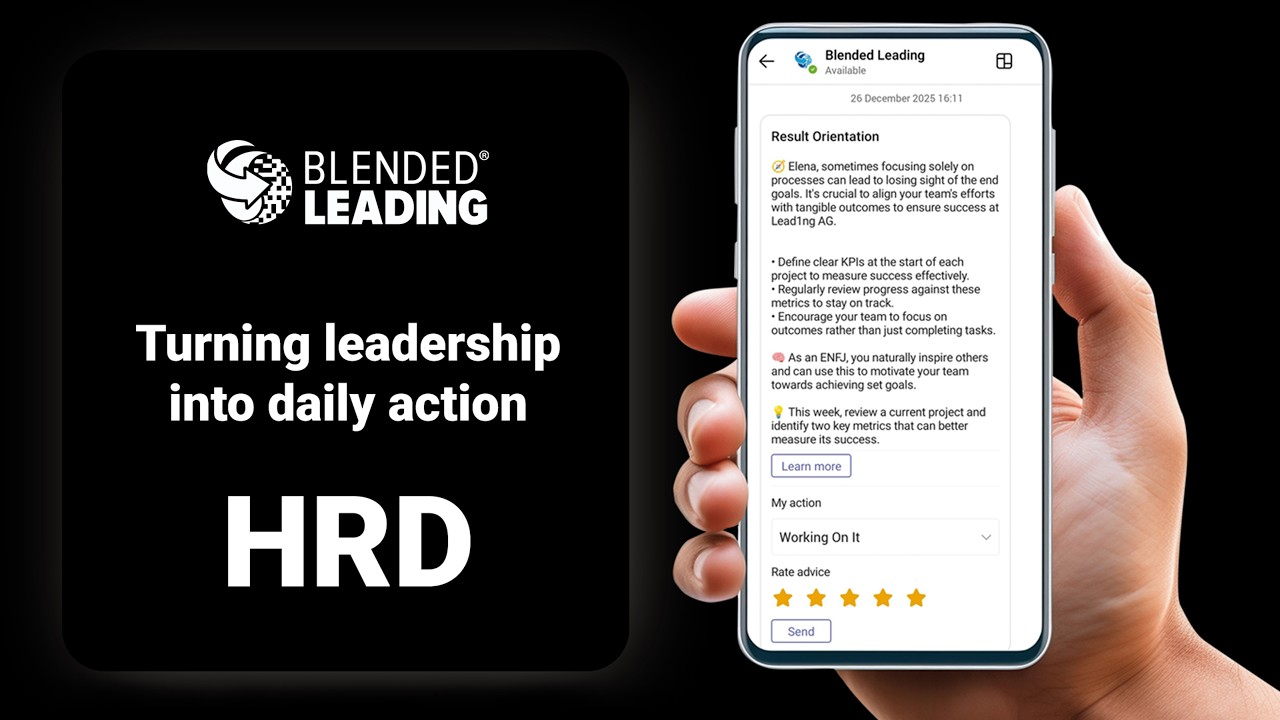
Blended Leading provides bite-sized, AI-driven nudging within Microsoft Teams. Its approach can use an organization’s leadership competency model, leadership guidelines and corporate values alongside individual leadership inputs to generate personalized leadership advice, or nudges.
That connection is relevant to strategy execution.
If organizations expect managers to lead according to particular competencies and values, development should reinforce those expectations close to everyday work rather than leaving them inside a training deck.
Blended Leading is designed to tailor nudges to individual leadership data and psychometric profiles while connecting development to the organization’s leadership context.
Unblock Managers Before Execution Slows Down
Executives set direction. Frontline teams deliver results. Team leads connect the two.

Organizations that want stronger strategy execution should therefore ask more than, “Have we communicated the strategy?”
A better question is:
Have we equipped managers to translate it into everyday leadership?
Give team leads clarity. Help them resolve competing priorities. Connect leadership expectations to real work. Reinforce the behaviors the strategy requires by nudging in the workflow.
When the middle can move, strategy has a much clearer route from intention to execution.
FAQ
What is strategy execution?
Strategy execution is the process of turning strategic priorities into coordinated actions, decisions and behaviors across an organization.
Why are team leads important for strategy execution?
They translate broader objectives into team priorities, communicate change, coordinate delivery and address operational blockers.
What commonly blocks middle managers?
Competing demands, limited authority, unclear priorities, leadership skill gaps and lack of time and appropriate advices can all create friction between strategic direction and daily execution.
How can HR support managers during strategic change?
HR can make leadership expectations clearer, connect development with organizational competency models and provide practical support with nudges that managers can apply during everyday leadership situations.
How does Blended Leading support leaders?
Blended Leading delivers personalized, bite-sized mentoring through Microsoft Teams. Its nudges can draw on organizational leadership frameworks and individual leadership data described in the supplied product materials.
If your strategy is clear but execution keeps getting stuck in the middle, the leadership layer connecting strategy with everyday work deserves attention.
Contact us and start a pilot to explore how Blended Leading can support your managers with leadership development connected to the way they actually work.