From Learning to Leading: How Nudges Turn Leadership Training into Daily Habits
Leadership training fails when learning stays theoretical
Nudges bridge the gap between knowledge and daily behavior
Embedding development into workflow drives real effectiveness
Leadership training effectiveness remains one of the biggest challenges for HR and business leaders. Companies invest heavily in programs, workshops, and coaching. Yet, weeks later, most managers return to old habits.
This is not a motivation problem. It is a system problem.
Mid-level managers operate under constant pressure. They manage teams, deliver results, and translate strategy into action. They simply do not have time to “remember” training content in the middle of a busy workday.
So the real question is: How do we make leadership training stick?
Why Leadership Training Effectiveness Breaks Down
Most leadership programs fail not because of poor content, but because of poor application.
Managers leave training sessions with good intentions. But reality quickly takes over:
Urgent tasks replace reflection
Old habits feel faster and safer
There is no trigger to apply new behaviors
This gap between learning and doing is where effectiveness is lost.
Traditional approaches assume that knowledge leads to behavior. In reality, behavior requires reinforcement, context, and timing.
The Missing Link: Nudges in Daily Work
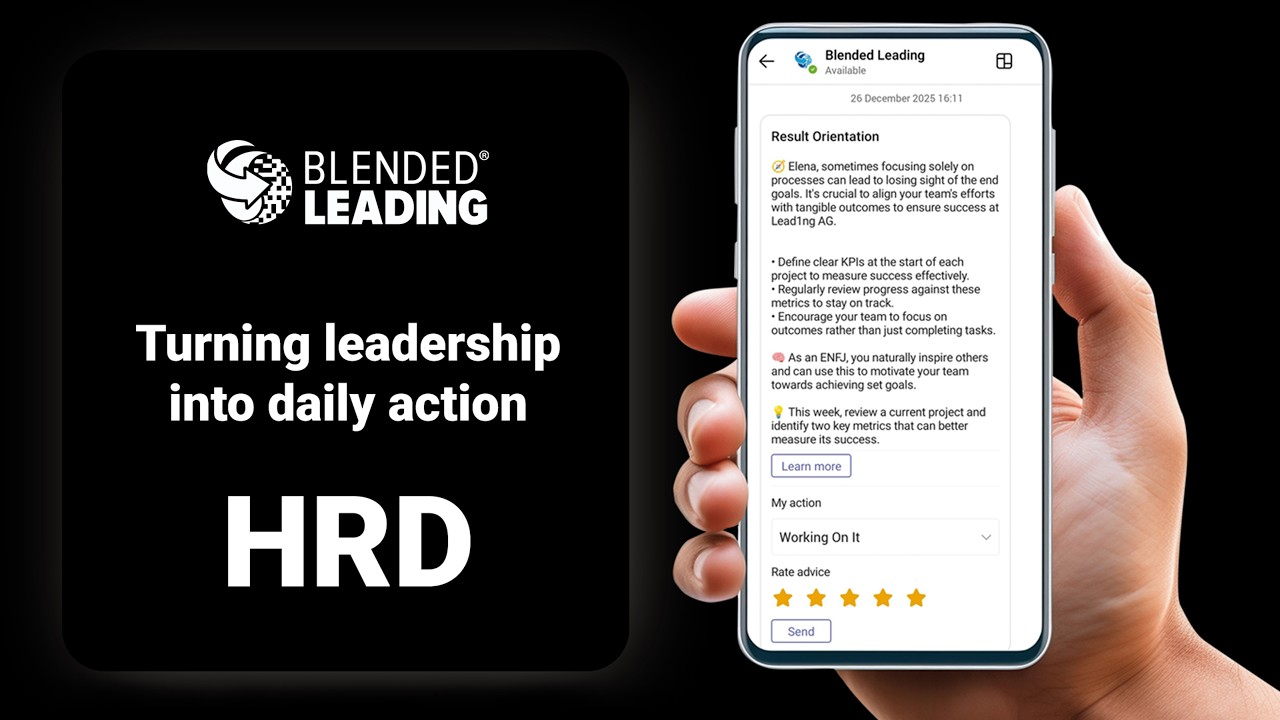
Nudges solve a simple but critical problem: they bring learning into the exact moment it is needed. Instead of expecting managers to recall a model from a workshop, nudges provide short, contextual guidance directly in their workflow.
This shift changes everything.
Rather than adding another training layer, nudges embed leadership development into daily routines. This is especially important for time-strapped managers who value practical, lightweight solutions that fit their workflow.
What Makes Nudges Effective
Nudges work because they are:
Timely
Delivered when a decision or interaction happens
Personalized
Based on individual strengths and gaps
Actionable
Focused on one small behavior at a time
Consistent
Repeated over time to build habits
This is how learning becomes behavior.
Instead of overwhelming managers with frameworks, nudges guide them step by step. Over time, these small actions compound into real leadership capability.
From Insight to Action: A Practical Flow
To improve leadership training effectiveness, organizations need to rethink how development is delivered.
A practical approach follows three steps:
1. Capture real leadership data Use existing tools like 360 feedback, psychometrics, and engagement surveys
2. Translate insights into micro-actions Identify small, relevant behavior shifts for each leader
3. Deliver nudges in the flow of work Provide guidance exactly when it is needed, not after the fact
This approach aligns closely with how modern managers actually work – fast, reactive, and context-driven.
Where Blended Leading Fits
Blended Leading addresses this exact gap between learning and doing.
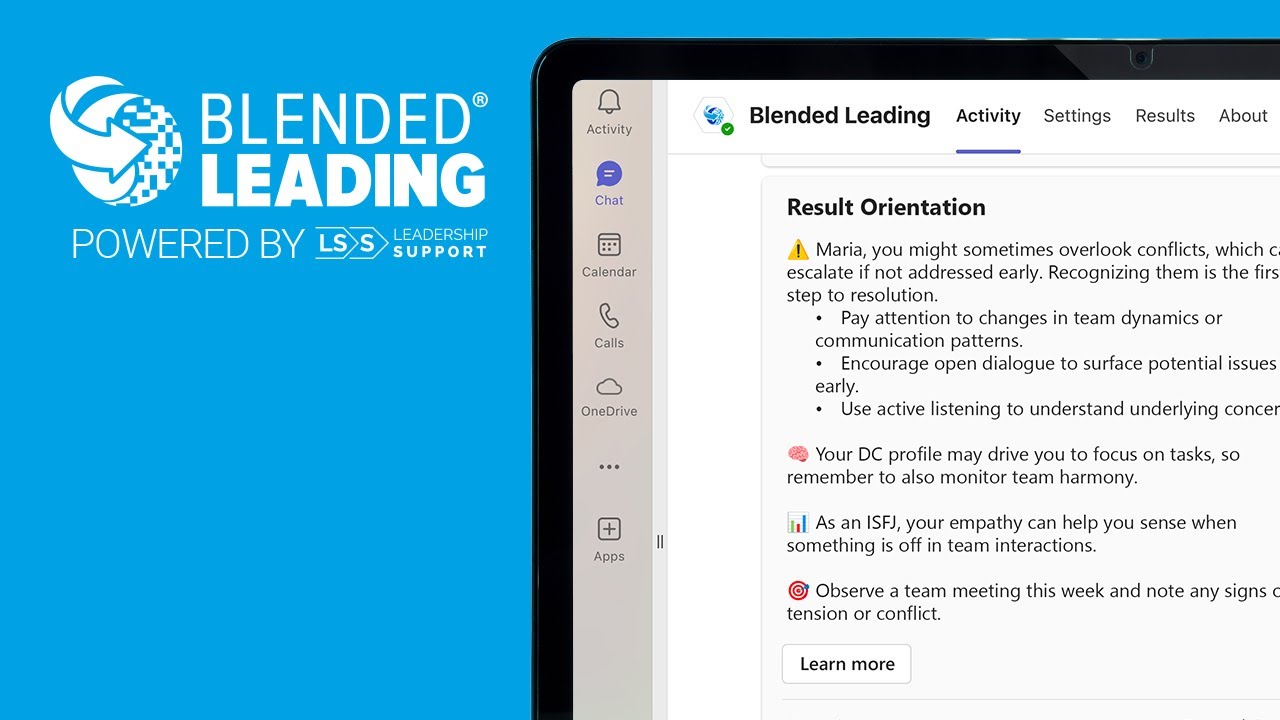
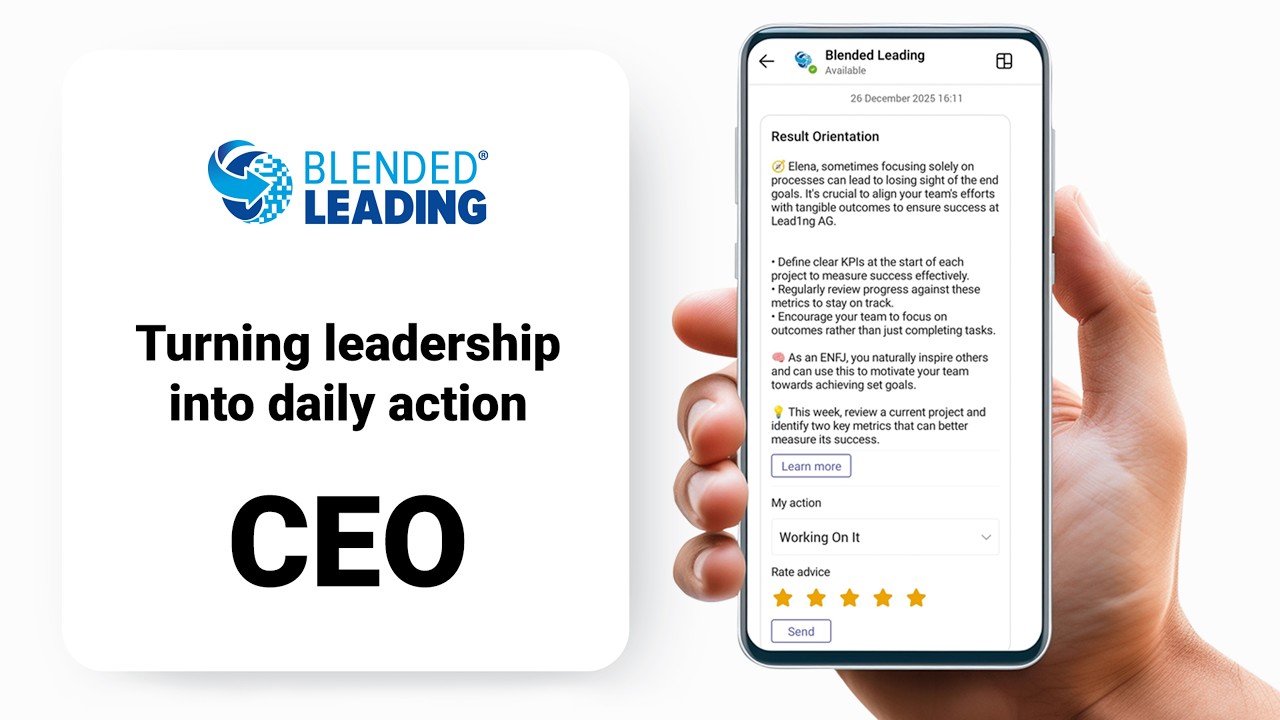
It transforms leadership training effectiveness by embedding personalized nudges directly into Microsoft Teams, where managers already operate daily.
Instead of generic advice, the platform uses:
Existing company data (360 feedback, LMS, psychometrics)
Organization-specific competency models
AI-generated, short leadership nudges based on the company context and individual leaders results
These nudges are tailored to each leader and delivered continuously, not just during training moments.
The result is a shift from one-off learning to ongoing behavioral change.
Importantly, this happens without adding administrative burden. Managers receive guidance within their existing workflow, making adoption natural rather than forced.
Why This Matters for HR and Business Leaders
For HR leaders, the pressure is clear. Leadership development must show measurable impact, not just participation rates.
For C-level executives, the concern is even more direct. Leadership inconsistency affects execution, culture, and results.
Improving leadership training effectiveness is no longer optional. It is a business priority.
Nudges provide a scalable way to:
Reinforce leadership behaviors across teams
Align managers with company strategy
Turn data into actionable development
Pro Tip
Start small. Focus on one leadership behavior, such as giving feedback or running effective 1:1s. Reinforce it with consistent nudges over time. Habit formation beats information overload every time.
From Training Events to Leadership Habits
The future of leadership development is not more content. It is better integration.
Organizations that succeed will move from:
One-time training → continuous development
Generic programs → personalized guidance
Learning outside work → learning inside work
This is how leadership becomes a daily practice, not a theoretical concept.
Leadership training effectiveness improves when behavior becomes automatic. And behavior becomes automatic when it is supported consistently, in context, and over time.
FAQs
1. What is leadership training effectiveness? It refers to how well leadership programs translate into real behavior change and improved team performance.
2. Why do leadership trainings often fail? Because they focus on knowledge, not application. Without reinforcement, managers revert to old habits.
3. What are nudges in leadership development? Short, personalized advices that guide leaders toward better behaviors in real-time situations.
4. How do nudges improve effectiveness? They deliver actionable advice in context, helping leaders apply learning immediately and consistently.
5. Can nudges replace traditional training? No. They enhance it by ensuring that learning is applied and sustained over time.
If you’re looking to improve leadership training effectiveness without adding complexity, we can help you embed development directly into daily work.
Digital HR strategy can easily become a technology strategy in disguise. Organizations implement platforms, collect employee feedback, run 360-degree assessments and expand digital learning libraries.
For decades, organizations have treated leadership development as a sequence of discrete events: a workshop delivered quarterly, a coaching engagement initiated after a performance review, an e-learning module completed to satisfy a compliance requirement.