The Leadership Development Paradox: Investing More, Changing Less
Why Leadership Training Effectiveness Often Falls Short
Companies invest in leadership training, but leaders often return to old habits.
Leadership training effectiveness depends on daily application, not event-based learning.
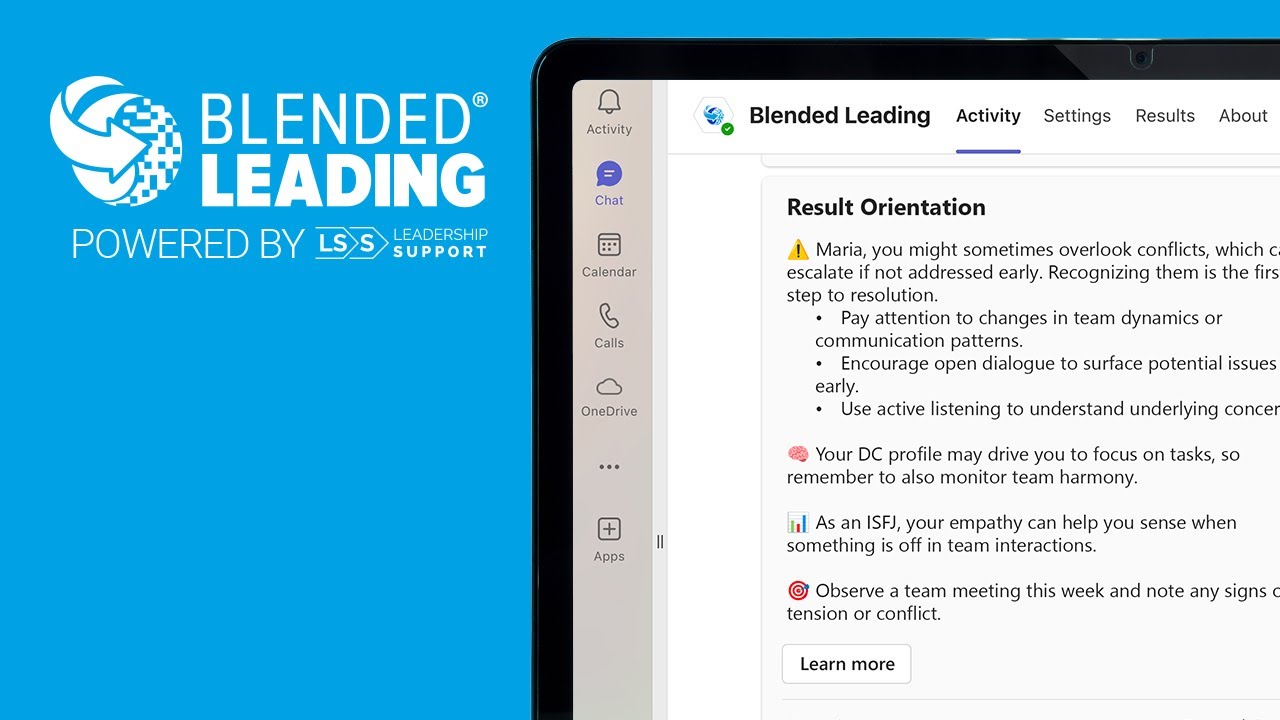
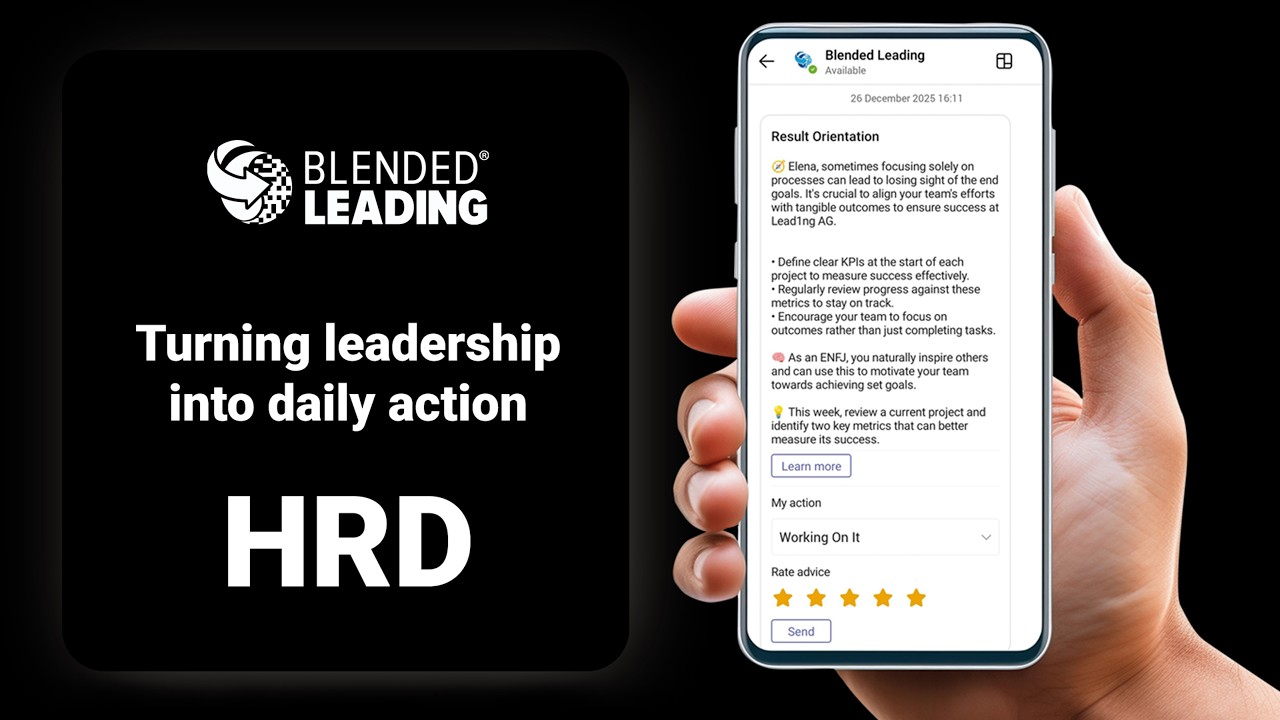
Blended Leading helps leaders apply learning through personalized nudges in Microsoft Teams.
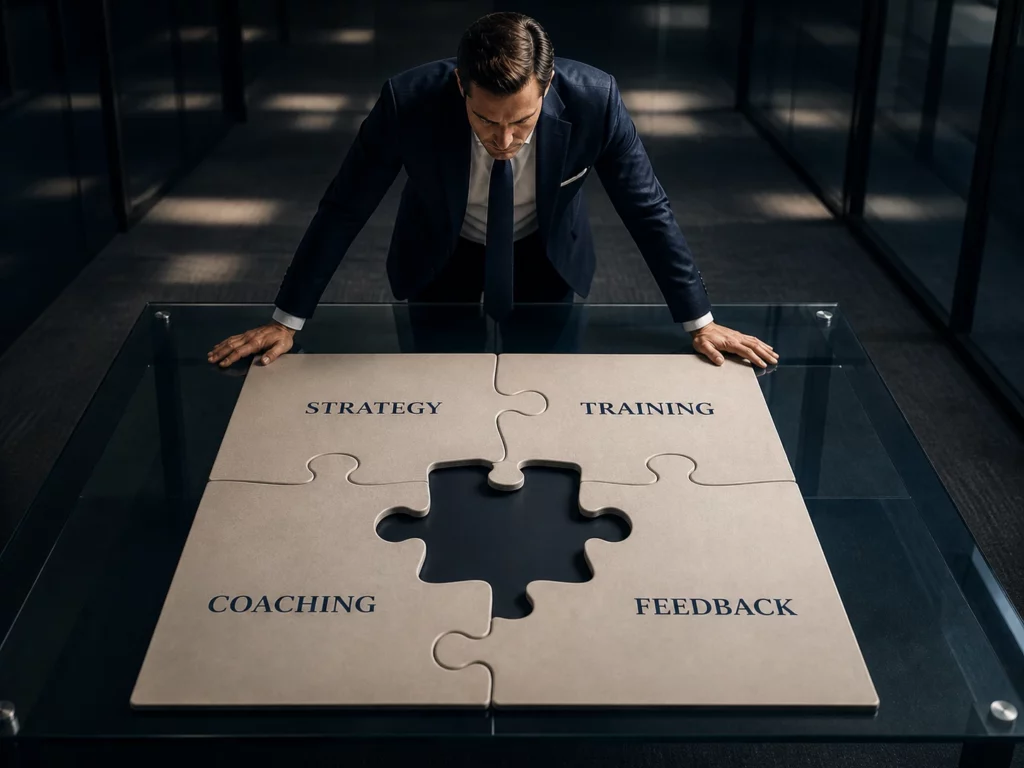
Many organizations invest heavily in leadership development. They plan workshops. They buy programs. They offer coaching. They invite experts.
Still, after the program ends, daily behavior often stays the same.
That is the leadership development paradox. More investment does not always create more change. In fact, many leaders leave training inspired, then return to pressure, meetings, deadlines, and old habits.
This is not because leaders do not care. Most do. It is because leadership training effectiveness depends less on what happens in the classroom and more on what happens after it.
A manager may learn how to give better feedback on Tuesday. On Wednesday, she faces a tense team meeting, three urgent reports, and a difficult conversation with a high performer. Under pressure, she uses the old script. It feels faster. It feels safer. It feels familiar.
This is where leadership development usually breaks.
The Real Problem Is Not Learning. It Is Transfer.
Traditional programs often focus on knowledge transfer. They explain models. They teach frameworks. They build awareness. These things matter.
Yet leadership is not only knowledge. It is behavior under pressure.
A leader does not become better at delegation by understanding delegation. He becomes better when he chooses not to take back the task at the first sign of risk.
A leader does not build trust by reading about psychological safety. She builds trust when she listens longer, asks clearer questions, and avoids defensive reactions.
This gap between knowing and doing is where leadership training effectiveness is won or lost.
Many HR and L&D teams already see the pattern:
Leaders enjoy the session but struggle to apply it later.
Feedback reports create insight but not always action.
Coaching is valuable but hard to scale.
Managers say they want development but have limited time.
Learning platforms contain content, but leaders rarely know what to use next.
The result is frustrating. HR invests. Leaders attend. Business expectations rise. But behavior change remains uneven.
Why Leaders Go Back to Old Habits
Old habits are efficient. That is the uncomfortable truth.
When a leader is tired, overloaded, or uncertain, the brain chooses the familiar path. This is why one workshop rarely changes daily leadership behavior.
Imagine a regional manager who receives 360-degree feedback. The report shows that her team wants more clarity and more consistent follow-up. She agrees. She wants to improve.
But Monday arrives. Her calendar is full. A senior stakeholder asks for urgent numbers. Two team members need decisions. By the end of the day, the feedback report is somewhere in her inbox.
Nothing is wrong with the report. The problem is timing.
Leadership advice becomes useful when it appears close to the moment of action. A short reminder before a one-to-one can change the quality of that conversation. A focused nudge before a team meeting can help a manager practice one specific behavior.
That is how learning moves from theory into work.
A Better Way to Improve Leadership Training Effectiveness
Leadership development should not end when the workshop ends. It should continue inside the workday.
This does not mean adding more tools, more admin, or more content. Leaders already have enough of that. It means turning existing leadership data into practical, timely guidance. A stronger approach has three parts:
1. Connect development to the company’s own leadership model.
2. Personalize guidance using existing feedback and assessment data.
3. Deliver support where leaders already work.
This is where Blended Leading enters the picture first.
Blended Leading provides bite-sized, AI-driven mentoring delivered directly in Microsoft Teams. It uses the client’s leadership competency model, corporate values, leadership guidelines, psychometric tools, 360-degree feedback reports, Microsoft Viva Insights, LMS links, and other HR development data selected by the client. The aim is not to create another generic learning experience. It is to make development specific, contextual, and easier to apply in daily work.
Leadership Support, through LS-S Leadership Support, is part of the journey behind this approach. The uploaded Blended Leading material states that Lean Digital Solutions & LS-S Leadership Support was founded in 2012 and is at the forefront of leadership enhancement.
From Programs to Personalized Leadership Nudges
key reason leadership training effectiveness drops is that leaders receive advice that is too broad.
“Communicate better” is not useful enough.
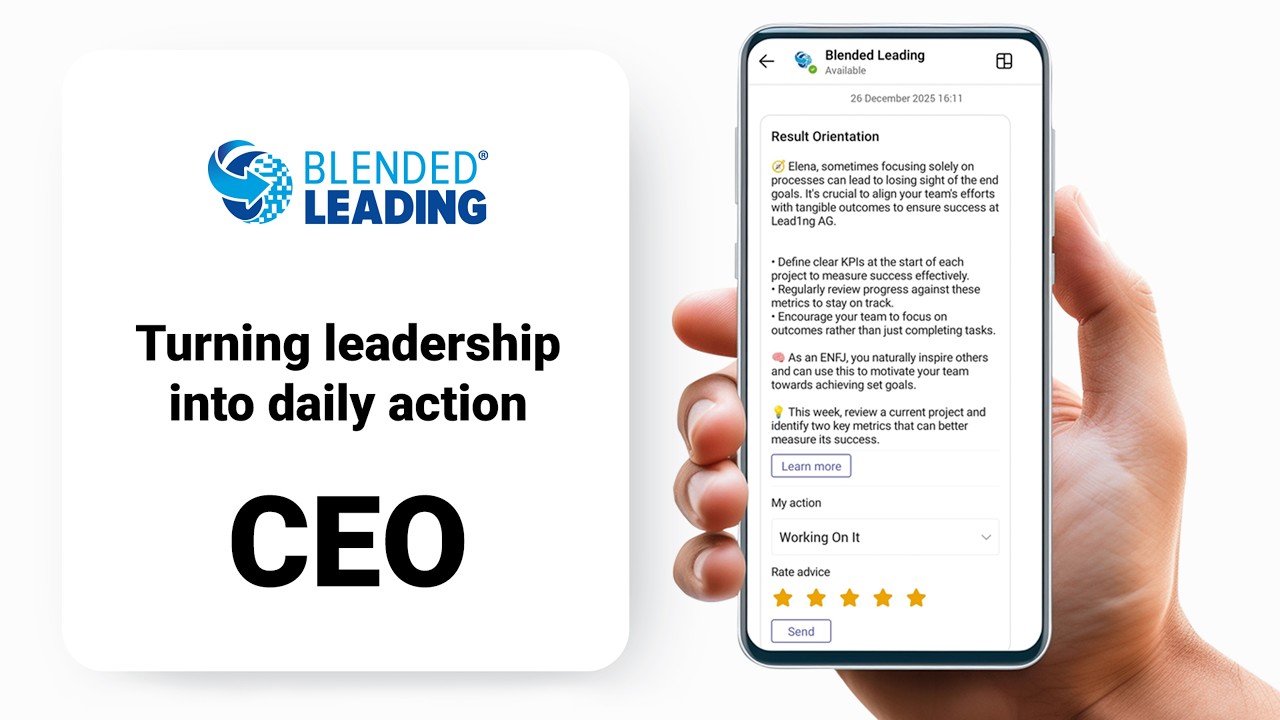
A better nudge might say: “In your next team meeting, open with the decision context before asking for input. This helps your team understand the ‘why’ before debating the ‘how’.”
That is small. It is practical. It can be tested today.
According to the uploaded product material, Blended Leading uses customer-specific AI agents. These include an Extraction AI Agent, a Sentiment AI Model, and a Generation AI Agent. Together, they process individual leadership data, analyze open-text feedback, and generate short personalized advice called nudges.
This matters because leaders do not need more abstract advice. They need the next useful action.
Practical Example: Turning Feedback Into Action
Consider a department head who receives feedback that team members experience her as distant in hybrid work.
A traditional program may recommend a module on communication or emotional intelligence. That can help. But it may still feel too general.
A personalized development flow could work differently.
The leader’s feedback is connected to the company’s leadership competencies. The system identifies a pattern around communication and trust. Then the leader receives a short weekly nudge in Microsoft Teams.
One week, the advice focuses on opening a team meeting with a personal check-in. Another week, it suggests asking each team member what is blocking progress. Later, it points to a relevant learning resource in the company’s LMS.
This creates continuity. It also respects the leader’s time.
Pro Tip: Measure Application, Not Attendance
Do not treat attendance as the main signal of leadership training effectiveness.
Attendance shows participation. It does not show behavior change.
Instead, look for signs that leaders are applying learning in real work. Are they holding better one-to-ones? Are they using feedback more consistently? Are they improving against defined leadership competencies? Are they engaging with development prompts over time?
The uploaded Blended Leading material notes that leaders can see extracted individual results, how competency results change over time, comparisons with other leaders’ results, and insights on strengths and areas for improvement.
That is a stronger direction. It moves development closer to progress.
The HR Opportunity
For HR and L&D leaders, the paradox is also an opportunity.
The issue is not that leadership development has no value. The issue is that value often disappears between the training room and the workday.
To improve leadership training effectiveness, organizations need to reduce that gap.
They need development that is:
tied to company values;
grounded in real leader data;
delivered in the flow of work;
short enough to use;
specific enough to change behavior.
This is especially important for middle managers. They translate strategy into execution. They manage pressure from above and expectations from below. They are often promoted for performance, not leadership readiness.
When these leaders receive practical support at the right moment, training has a better chance to become behavior.
Conclusion: Less Event, More Everyday Change
Leadership development should not depend on memory alone.
A leader may remember a model. But in a difficult moment, she needs a prompt, a question, or a next step that fits the situation.
That is the shift organizations need to make. From more training to better transfer. From content libraries to applied guidance. From one-off events to continuous leadership habits.
Blended Leading supports this shift through AI-driven mentoring in Microsoft Teams, tailored to each organization’s leadership context. Leadership Support is connected to this leadership enhancement journey. Learn more at https://ls-s.com/en/
FAQs
What is leadership training effectiveness?
Leadership training effectiveness means how well training leads to real behavior change, not only attendance or satisfaction.
Why do leadership programs often fail to change behavior?
Many programs stop at awareness. Leaders return to pressure, deadlines, and old habits without practical support in the flow of work.
How can HR improve leadership training effectiveness?
HR can connect development to leadership competencies, use existing feedback data, and provide timely guidance during daily work.
What role do nudges play in leadership development?
Nudges turn broad learning into small, practical actions leaders can apply in real situations.
How does Blended Leading support leadership development?
Blended Leading delivers bite-sized, AI-driven mentoring in Microsoft Teams, using client-selected leadership data and company-specific models.
Want to make leadership development easier to apply after training ends? Contact us to explore how Blended Leading can support your leadership training effectiveness goals.
blended leading, digital mentorship, digital tools, HR, HR Tech, HR trends, leadership, leadership trianing, mentorship, remote leadership, remote working
Digital HR strategy can easily become a technology strategy in disguise. Organizations implement platforms, collect employee feedback, run 360-degree assessments and expand digital learning libraries.
For decades, organizations have treated leadership development as a sequence of discrete events: a workshop delivered quarterly, a coaching engagement initiated after a performance review, an e-learning module completed to satisfy a compliance requirement.